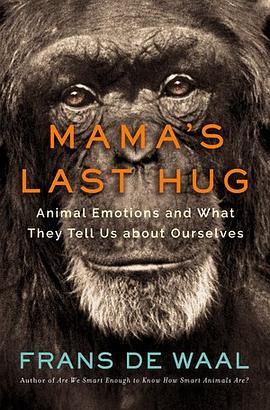
Mama's Last Hug
内容简介
New York Times best-selling author and primatologist Frans de Waal explores the fascinating world of animal and human emotions.
Mama’s Last Hug opens with the dramatic farewell between Mama, a dying fifty-nine-year-old chimpanzee matriarch, and biologist Jan Van Hooff. This heartfelt final meeting of two longtime friends, widely shared as a video, offers a window into how deep and instantly recognizable these bonds can be. So begins Frans de Waal’s whirlwind tour of new ideas and findings about animal emotions, based on his renowned studies of the social and emotional lives of chimpanzees, bonobos, and other primates.
De Waal discusses facial expressions, animal sentience and consciousness, Mama’s life and death, the emotional side of human politics, and the illusion of free will. He distinguishes between emotions and feelings, all the while emphasizing the continuity between our species and other species. And he makes the radical proposal that emotions are like organs: we don’t have a single organ that other animals don’t have, and the same is true for our emotions.
......(更多)
作者简介
Frans de Waal has been named one of Time magazine’s 100 Most Influential People. The author of Are We Smart Enough to Know How Smart Animals Are?, among many other works, he is the C. H. Candler Professor in Emory University’s Psychology Department and director of the Living Links Center at the Yerkes National Primate Research Center. He lives in Atlanta, Georgia.
......(更多)
目录
......(更多)
读书文摘
“羞愧”一词被认为源自一个意为“掩盖”的早期词语。我们深埋着脸,避开他人的目光,膝盖弯曲,目光朝下,看起来很痛苦,身体姿态也降低了。我们嘴角下拉,皱着眉头,呈现出一种明显人畜无害的表情。我们也可能会咬或噘着嘴唇,或者用手遮着脸,好像我们“想找个 地缝儿钻进去”。我们说自己感到很羞愧,部分原因是因为我们知道人们对我们很生气,或者至少他们对我们很愤怒或很失望。
如今,我们把这件事称之为“男人说教”事件,即以居高临下的说教姿态向对方解释某事,以为对方完全无知。
......(更多)