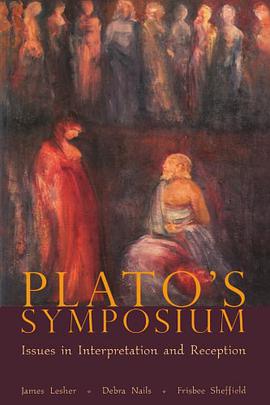
Plato's Symposium
内容简介
In his Symposium, Plato crafted a set of speeches in praise of love that has influenced writers and artists from antiquity to the present. Early Christian writers read the dialogue's 'ascent passage' as a vision of the soul's journey to heaven. Ficino's commentary on the Symposium inspired poets and artists throughout Renaissance Europe and introduced 'a Platonic love' into common speech. Themes or images from the dialogue have appeared in paintings or sketches by Rubens, David, Feuerbach, and La Farge, as well as in musical compositions by Satie and Bernstein. The dialogue's view of love as 'desire for eternal possession of the good' is still of enormous philosophical interest in its own right. Nevertheless, questions remain concerning the meaning of specific features, the significance of the dialogue as a whole, and the character of its influence. This volume brings together an international team of scholars to address such questions.
......(更多)
作者简介
......(更多)
目录
......(更多)
读书文摘
回答当然是肯定的く记忆( memory)使知识不朽》实际上,欧奥提玛在20836处说过类似的话,在那里她主张,一天又天,我们日常思考“同样想法”的经历,事实上是在创造新的记以取代由忘而已经消逝的记忆。如果如她所说,我们自己在眼下回忆以所知的过程是一种获得凡人的不性的过程,那么当其他人记住我教给他们的东西时,同样的过程或许也发生了。
一个人如果一直接受爱的教育,按照这样的次序一一观察各种美的东西,直到这门爱的学问的结尾,就会突然发现一种务必奇妙的美者,即美本身
......(更多)