The Hedgehog and the Fox
内容简介
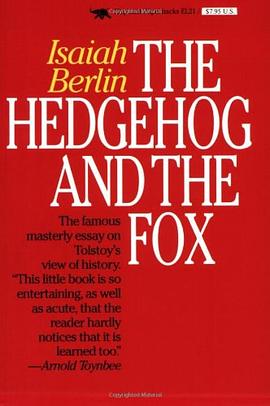
"The fox knows many things, but the hedgehog knows one big thing." This fragment of verse by the Greek poet Archilochus describes the central thesis of Isaiah Berlin's masterly essay on Tolstoy, in which he underlines a fundamental distinction between those people (foxes) who are fascinated by the infinite variety of things and those (hedgehogs) who relate everything to a central, all embracing system. Tolstoy longed for a unitary vision, Sir Isaiah observes, but his marvelous perception of people, things, and the moments of history was so acute that he could not stop himself from writing as he saw, felt, and understood. He was by nature a fox who wanted to be a hedgehog. Since its first publication in 1953 Sir Isaiah's long essay has acquired the status of a small masterpiece. In its distillation of his profound knowledge of Russian thought and more general political philosophy, The Hedgehog and the Fox is a triumph of erudition and a superb entryway into an understanding of Tolstoy's work. "This little book is so entertaining, as well as acute, that the reader hardly notices that it is learned too." Arnold Toynbee.
......(更多)
作者简介
......(更多)
目录
......(更多)
读书文摘
现存的历史,正如托尔斯泰所说,“也许只占实际上构成人类历史的因素的千分之一”?历史,正如它通常呈现的那样,往往把“政治”(公共的)事件作为最重要的代表,而精神的(“内在的”)事件很大程度上被遗忘了。然而初步看来,它们——“内在的”事件——才是人类最真实、最直接的经验。它们,也只有它们,才是构成生活的终极因素。因此,传统的政治历史学家都在说些肤浅的废话。
事实上,在卡列耶夫看来,当托尔斯泰谴责那些形而上的作家倾向于理想化或将因果效应归于“英雄”“历史力量”“道德力量”“民族主义”“理性”等抽象实体时,他达到了自己的巅峰,因为他们同时犯下了两个致命的错误:发明不存在的实体来解释具体的事件,以及让个人、国家、阶级或形而上学的偏见任意支配。
他不怕质疑任何事情,他相信一定存在某种简单的答案——只要我们不老是折磨自己,到陌生而遥远的地方去寻找答案——而答案一直就在我们脚下。
相反,一个人积累的事实越多,他的努力就越徒劳,他的失败就越无望。
......(更多)