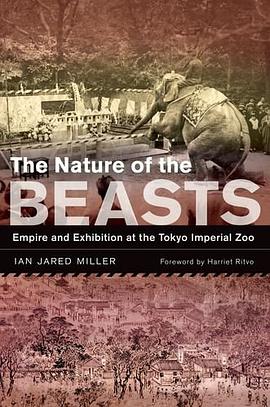
The Nature of the Beasts
内容简介
It is widely known that such Western institutions as the museum, the university, and the penitentiary shaped Japan’s emergence as a modern nation-state. Less commonly recognized is the role played by the distinctly hybrid institution—at once museum, laboratory, and prison—of the zoological garden. In this eye-opening study of Japan’s first modern zoo, Tokyo’s Ueno Imperial Zoological Gardens, opened in 1882, Ian Jared Miller offers a refreshingly unconventional narrative of Japan’s rapid modernization and changing relationship with the natural world. As the first zoological garden in the world not built under the sway of a Western imperial regime, the Ueno Zoo served not only as a staple attraction in the nation’s capital—an institutional marker of national accomplishment—but also as a site for the propagation of a new “natural” order that was scientifically verifiable and evolutionarily foreordained. As the Japanese empire grew, Ueno became one of the primary sites of imperialist spectacle, a microcosm of the empire that could be traveled in the course of a single day. The meaning of the zoo would change over the course of Imperial Japan’s unraveling and subsequent Allied occupation. Today it remains one of Japan’s most frequently visited places. But instead of empire in its classic political sense, it now bespeaks the ambivalent dominion of the human species over the natural environment, harkening back to its imperial roots even as it asks us to question our exploitation of the planet’s resources.
......(更多)
作者简介
Ian Jared Miller is assistant professor in the Department of History at Harvard University.
......(更多)
目录
Machine generated contents note: Animals in the Anthropocene
Ecological Modernity in Japan
The Natural World as Exhibition
pt. ONE THE NATURE OF CIVILIZATION
1.Japan's Animal Kingdom: The Origins of Ecological Modernity and the Birth of the Zoo
Bringing Politics to Life
Sorting Animals Out in Meiji Japan
Animals in the Exhibitionary Complex
The Ueno Zoo
Ishikawa Chiyomatsu and the Evolution of Exhibition
Bigot's Japan
Conclusion
2.The Dreamlife of Imperialism: Commerce, Conquest, and the Naturalization of Ecological Modernity
The Dreamlife of Empire
The Nature of Empire
Nature Behind Glass
Backstage at the Zoo
The Illusion of Liberty
Imperial Trophies
Imperial Nature
Conclusion
pt. TWO THE CULTURE OF TOTAL WAR
3.Military Animals: The Zoological Gardens and the Culture of Total War
Military Animals
Mobilizing the Animal World
The Eye of the Tiger
Animal Soldiers
Horse Power
Conclusion
4.The Great Zoo Massacre
The Culture of Total Sacrifice
A Strange Sort of Ceremony
Mass-Mediated Sacrifice
The Taxonomy of a Massacre
The Killing Floor
And Then There Were Two
Conclusion
pt. THREE AFTER EMPIRE
5.The Children's Zoo: Elephant Ambassadors and Other Creatures of the Allied Occupation
Bambi Goes to Tokyo
Empire after Empire
Neocolonial Potlatch
"Animal Kindergarten"
Occupied Japan's Elephant Mania
Elephant Ambassadors
Conclusion
6.Pandas in the Anthropocene: Japan's "Panda Boom" and the Limits of Ecological Modernity
The "Panda Boom"
The Science of Charisma
Panda Diplomacy
"Living Stuffed Animals"
The Nature of Copyright
The Biotechnology of Cute
Conclusion.
......(更多)
读书文摘
我的首要论点在于,当上野动物园将圈养动物打造成未受干扰的纯正“自然”的代表时,它同时也将人与自然世界的分野制度化起来,从而生成一种人性与兽性的断裂,这种断裂将日本人与西方人一并重塑为一个基于林奈命名法和进化论信条的新的自然历史的理性掌控者。而这种文化首要的消费者就是日本人本身。
......(更多)