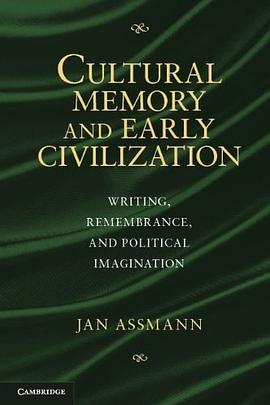
Cultural Memory and Early Civilization
内容简介
Now available to an English-speaking audience, this book presents a groundbreaking theoretical analysis of memory, identity and culture. It investigates how cultures remember, arguing that human memory exists and is communicated in two ways, namely inter-human interaction and in external systems of notation, such as writing, which can span generations. Dr Assmann defines two theoretical concepts of cultural memory, differentiating between the long-term memory of societies, which can span up to 3,000 years, and communicative memory, which is typically restricted to 80 to 100 years. He applies this theoretical framework to case studies of four specific cultures, illustrating the function contexts and specific achievements, including the state, international law, religion and science. Ultimately, his research demonstrates that memory is not simply a means of retaining information, but rather a force that can shape cultural identity and allow cultures to respond creatively to both daily challenges and catastrophic changes.
......(更多)
作者简介
扬•阿斯曼(Jan Assmann),国际知名埃及学专家,现为海德堡科学院院士,兼任德国考古研究所、德国历史人类学研究所等机构研究员。从1970年代起组织有关记忆问题的跨学科研究,开创“文化记忆”理论,在学术界产生广泛影响。
......(更多)
目录
......(更多)
读书文摘
我认为,比起在保留着文化进化论的模式下,将蒙昧的和开化的文化简单更名为冷的和热的文化来说,更有成效的研究方法是彻底抛开这一模式,而将“冷”和“热”作为文化层面上的不同类型或者记忆政治中的不同策略加以考察,这样它们就可以不再受到时间、文字、历法、技术和统治力量的限制。在“冷”的文化类型中,文字和统治机构也可以成为冻结历史的工具。
......(更多)