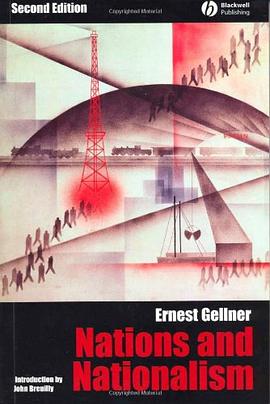
Nations and Nationalism
内容简介
Nationalism is one of the most powerful forces in the modern world, yet it is surprisingly little studied and only imperfectly understood, either by its adherents or its opponents. Its irruption into the modern world is often explained as a resurgence of primitive, atavistic instincts, or as a delusion fostered by a few theoreticians, politicians or propagandists.
The present volume interprets nationalism in terms of its social roots, which it locates in industrial social organization. A society that aims for affluence and economic growth, Professor Gellner argues, depends on innovation, occupational mobility, mass media, universal literacy, and education in a shared, standard idiom. Taken together these transform the relationship between culture and the state. The functioning of the society depends on an all-embracing educational system, tied to one culture and protected by a state identified with that culture. The principle one state, one culture makes itself felt, and political units which do not conform to it feel the strain in the form of nationalist activity. --This text refers to an out of print or unavailable edition of this title.
Table of Contents
About the Authors vii
About this Edition viii
Editor's Preface to the First Edition R. I. Moore, Founding Editor ix
Acknowledgements for the First Edition xi
Introduction John Breuilly xiii
1 Definitions 1
State and Nation 3
The Nation 5
2 Culture in Agrarian Society 8
Power and Culture in the Agro-literate Polity 9
Culture 11
The State in Agrarian Society 13
The Varieties of Agrarian Rulers 14
3 Industrial Society 19
The Society of Perpetual Growth 23
Social Genetics 29
The Age of Universal High Culture 34
4 The Transition to an Age of Nationalism 38
A Note on the Weakness of Nationalism 42
Wild and Garden Cultures 48
5 What is a Nation? 52
The Course of True Nationalism Never did Run Smooth 57
6 Social Entropy and Equality in Industrial Society 62
Obstacles to Entropy 63
Fissures and Barriers 72
A Diversity of Focus 73
7 A Typology of Nationalisms 85
The Varieties of Nationalist Experience 94
Diaspora Nationalism 98
8 The Future of Nationalism 106
Industrial Culture - One or Many? 110
9 Nationalism and Ideology 118
Who is for Nuremberg? 125
One Nation, One State 128
10 Conclusion 131
What is not being Said 131
Summary 133
......(更多)
作者简介
British philosopher, anthropologist and sociologist, self-described Enlightenment rationalist fundamentalist, born to Czech parents in Paris and raised in Prague, where he lived the last few years of his life, and died in 1995. He received a very thorough training in the Wittgensteinian "linguistic" or "ordinary language" philosophy fashionable in Britain (and more particularly Oxford) in the '50s, and found himself quite unable to believe it, so he ran away to become an anthropologist, and studied the Berbers because a mountaineering group at the London School of Economics organized a trip to the Atlas. His first book, Words and Things (1959; preface by Russell, to whom he dedicated his second book) combined a crushing philosophical critique of linguistic philosophy with a sociological analysis of "the narodniks of North Oxford", "an intelligentsia without ideas." It was at once a succès de scandale (probably the only kind Gellner wanted, frankly) and the first real demonstration of his style: a devastating, hilarious combination of learning and intellectual seriousness with verbal play and irreverence, in particular an almost uncanny talent for finding apt, mocking names for things and ideas.
......(更多)
目录
Table of Contents
About the Authors vii
About this Edition viii
Editor's Preface to the First Edition R. I. Moore, Founding Editor ix
Acknowledgements for the First Edition xi
Introduction John Breuilly xiii
1 Definitions 1
State and Nation 3
The Nation 5
2 Culture in Agrarian Society 8
Power and Culture in the Agro-literate Polity 9
Culture 11
The State in Agrarian Society 13
The Varieties of Agrarian Rulers 14
3 Industrial Society 19
The Society of Perpetual Growth 23
Social Genetics 29
The Age of Universal High Culture 34
4 The Transition to an Age of Nationalism 38
A Note on the Weakness of Nationalism 42
Wild and Garden Cultures 48
5 What is a Nation? 52
The Course of True Nationalism Never did Run Smooth 57
6 Social Entropy and Equality in Industrial Society 62
Obstacles to Entropy 63
Fissures and Barriers 72
A Diversity of Focus 73
7 A Typology of Nationalisms 85
The Varieties of Nationalist Experience 94
Diaspora Nationalism 98
8 The Future of Nationalism 106
Industrial Culture - One or Many? 110
9 Nationalism and Ideology 118
Who is for Nuremberg? 125
One Nation, One State 128
10 Conclusion 131
What is not being Said 131
Summary 133
......(更多)
读书文摘
基布茨是否像它们的创始人所相信和希望的那样,的确为现代人提供了美好生活,这仍然是一个值得探讨的问题;但是,作为重新安排高度都市化和资产阶级化的人口的一种机构,同时也作为在军事危机中可以以最少的资源有效自卫的组织,基布茨被证明是非常突出的,的确没有其他组织形式可以与之相比。
总的来说,民族主义意识形态受到普遍存在的虚假意识的影响。他的神话颠倒了事实:它声称捍卫民间文化,而事实上却在构建一种高层次文化;它声称保护着一个古老的民间社会,而事实上,却在为建立一个没有个性特征的大众社会推波助澜。(前民族主义时期的德国,是由大量真正的社群组成的,其中许多都是乡村社群。后民族主义时期的统一的德国,主要是一个工业的、大众的社会。)
......(更多)