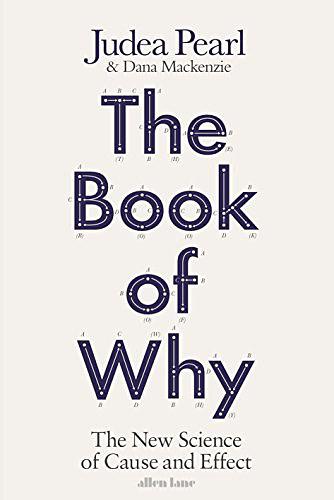
The Book of Why
内容简介
A Turing Award-winning computer scientist and statistician shows how understanding causality has revolutionized science and will revolutionize artificial intelligence
"Correlation is not causation." This mantra, chanted by scientists for more than a century, has led to a virtual prohibition on causal talk. Today, that taboo is dead. The causal revolution, instigated by Judea Pearl and his colleagues, has cut through a century of confusion and established causality--the study of cause and effect--on a firm scientific basis. His work explains how we can know easy things, like whether it was rain or a sprinkler that made a sidewalk wet; and how to answer hard questions, like whether a drug cured an illness. Pearl's work enables us to know not just whether one thing causes another: it lets us explore the world that is and the worlds that could have been. It shows us the essence of human thought and key to artificial intelligence. Anyone who wants to understand either needs The Book of Why.
......(更多)
作者简介
Judea Pearl is a professor of computer science at UCLA and winner of the 2011 Turing Award and the author of three classic technical books on causality. He lives in Los Angeles, California.
Dana Mackenzie is an award-winning science writer and the author of The Big Splat, or How Our Moon Came to Be. He lives in Santa Cruz, California.
......(更多)
目录
......(更多)
读书文摘
事实上,我在机器学习方面的研究经历告诉我,因果关系的学习者必须熟练掌握至少三种不同层级的认知能力:观察能力(seeing)、行动能力(doing)和想象能力(imagining)。
......(更多)