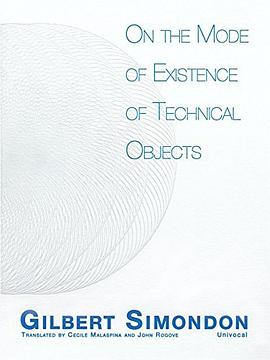
On the Mode of Existence of Technical Objects
内容简介
Few thinkers have been as influential upon current discussions and theoretical practices in the age of media archaeology, philosophy of technology, and digital humanities as the French thinker Gilbert Simondon. Simondon’s prolific intellectual curiosity led his philosophical and scientific reflections to traverse a variety of areas of research, including philosophy, psychology, the beginnings of cybernetics, and the foundations of religion. For Simondon, the human/machine distinction is perhaps not a simple dichotomy. There is much we can learn from our technical objects, and while it has been said that humans have an alienating rapport with technical objects, Simondon takes up the task of a true thinker who sees the potential for humanity to uncover life-affirming modes of technical objects whereby we can discover potentiality for novel, healthful, and dis-alienating rapports with them. For Simondon, by way of studying its genesis, one must grant to the technical object the same ontological status as that of the aesthetic object or even a living being. His work thus opens up exciting new entry points into studying the human’s rapport with its continually changing technical reality. This first complete English-language translation of Gilbert Simondon’s groundbreaking and influential work finally presents to Anglophone readers one of the pinnacle works of France’s most unique thinkers of technics.
......(更多)
作者简介
Gilbert Simondon (1924–1989) was a French philosopher of technology whose work continues to attract new interest within a variety of academic fields.
......(更多)
目录
......(更多)
读书文摘
通过不确定性范围,而不是自动化,机器可以被逻辑性地组合,通过人作为协调者来进行机器之间信息的交换。甚至当信息的交流是直接在机器同进行时(就好像振荡器之间由脉冲来同步化一样),也需要人的参与来调整不确定性范围,来优化信息的交换。
......(更多)